
Updated
Choosing a mattress feels overwhelming because most guides throw 15 factors at you and expect you to sort it all out. The truth is simpler. Three things drive 90% of the decision: how you sleep, what you weigh, and what “comfortable” means to you. Everything else is secondary.
This guide walks you through each factor in order of importance so you can narrow down your options quickly and confidently.
The Three Factors That Matter Most
Before you compare brands, read reviews, or set a budget, get clear on these three things. They’ll eliminate most of the guesswork.
Your Sleeping Position
Your sleeping position is the single biggest factor in choosing a mattress. It determines how your body distributes weight and where you need the most support.
Back sleepers need medium-firm support. Your spine should maintain its natural curve without your hips sinking too deep or your lower back arching off the surface. A mattress that’s too soft will let your pelvis drop, which strains the lumbar spine overnight.
Side sleepers need a softer surface, typically medium to medium-soft. Your shoulders and hips are the widest points making contact with the mattress, and they need room to sink in. A mattress that’s too firm creates pressure points at the shoulder and hip, leading to numbness and tossing.
Stomach sleepers need firmer support, usually medium-firm to firm. A soft mattress lets your midsection sag, which hyperextends the lower back. You want a surface that keeps your torso level with the rest of your body.
Combination sleepers who shift positions throughout the night do best with a medium firmness that accommodates multiple positions. A responsive mattress (hybrid or latex) that adjusts quickly as you move is a better fit than slow-responding memory foam.
Your Body Type and Weight
Body weight changes how a mattress performs. A mattress rated “medium-firm” won’t feel the same to someone who weighs 130 pounds as it does to someone who weighs 230 pounds.
Under 130 lbs: You won’t compress the mattress as much, so most mattresses will feel firmer to you than advertised. Lean toward softer options (soft to medium) to get enough contouring and pressure relief.
130 to 230 lbs: You’ll experience firmness levels roughly as described by the manufacturer. Choose based on your sleeping position using the guidance above.
Over 230 lbs: You’ll sink deeper into any mattress, so you need a firmer option than your sleeping position alone would suggest. A side sleeper over 230 lbs, for example, should look at medium-firm rather than medium. Thicker mattresses (12 inches or more) with reinforced support layers also matter here, because a thin comfort layer will bottom out under higher weight.
Your Comfort Preferences
After position and weight, personal preference fills in the rest. Ask yourself:
- Do you like the “hug” feeling or a bouncier surface? Memory foam hugs. Latex and innerspring bounce. Hybrids split the difference.
- Do you sleep hot? If you regularly wake up sweating, prioritize airflow. Innerspring and latex breathe better than traditional memory foam. Gel-infused foams and hybrid designs with coil bases also help.
- Do you share the bed? If your partner’s movements wake you up, motion isolation matters. Memory foam absorbs motion best. Innerspring transfers it most.
These preferences will steer you toward a specific mattress type.
Mattress Types Explained (and Who Each One Fits)
There are four main mattress types. Each has clear strengths and trade-offs.
Memory Foam
Memory foam contours closely to your body, cradling pressure points and absorbing movement. It’s the best option for side sleepers who need pressure relief and for couples who want minimal motion transfer.
Best for: Side sleepers, lighter-weight sleepers, couples sensitive to motion.
Watch out for: Heat retention (look for gel-infused or open-cell foam), slow response time if you change positions often.
Innerspring
Innerspring mattresses use steel coils for support and tend to sleep cooler because air flows freely through the coil structure. They offer a traditional, bouncy feel with strong edge support.
Best for: Back sleepers, stomach sleepers, people who prefer a firmer and more responsive surface, hot sleepers.
Watch out for: Less pressure relief for side sleepers, more motion transfer than foam options.
Hybrid
Hybrids combine a pocketed coil base with foam or latex comfort layers. This gives you the support and airflow of coils with the pressure relief of foam. They’re the most versatile type and work well for most sleeper profiles.
Best for: Combination sleepers, couples with different preferences, heavier sleepers who need both cushioning and deep support.
Watch out for: Typically heavier and more expensive than all-foam options.
Latex
Latex is naturally responsive and breathable. It bounces back faster than memory foam, so you feel like you’re sleeping “on” the mattress rather than “in” it. Natural latex is also durable and resistant to dust mites.
Best for: Hot sleepers, people who want pressure relief without the sinking feeling, eco-conscious buyers.
Watch out for: Higher price point. Some people find it too bouncy or too firm.
How to Match Firmness to the Way You Sleep
Firmness is measured on a 1-to-10 scale, where 1 is the softest and 10 is the firmest. Here’s where most people land based on their sleeping position and weight:
| Sleeping Position | Under 130 lbs | 130-230 lbs | Over 230 lbs |
|---|---|---|---|
| Side sleeper | Soft to Medium (3-5) | Medium (4-6) | Medium-Firm (5-7) |
| Back sleeper | Medium (5-6) | Medium-Firm (6-7) | Firm (7-8) |
| Stomach sleeper | Medium-Firm (5-6) | Firm (6-7) | Firm to Extra-Firm (7-9) |
| Combination | Medium (4-6) | Medium (5-6) | Medium-Firm (6-7) |
A few notes on this table:
- These are starting points, not rules. Personal preference matters. Some back sleepers genuinely prefer a softer surface, and that’s fine if they’re not waking up with pain.
- If you fall between two firmness levels, go slightly firmer. It’s easier to add a soft topper than to firm up a mattress that’s too plush.
- Couples with different needs should consider a hybrid with moderate firmness (5-7 range) as a compromise, or look into mattresses with dual-firmness options. Our mattress size chart can help you pick the right dimensions for your room and sleep setup.
Your Quick-Reference Mattress Decision Guide
Use this to connect the dots between your profile and your ideal mattress:
If you’re a side sleeper under 180 lbs who wants pressure relief and doesn’t sleep hot: choose a medium memory foam or a hybrid with a plush comfort layer.
If you’re a side sleeper over 200 lbs: choose a medium-firm hybrid with at least 3 inches of comfort foam over pocketed coils. You need contouring on top but firm support underneath so you don’t bottom out.
If you’re a back sleeper of average weight: a medium-firm hybrid or innerspring is your sweet spot. You want even support across your entire back without excessive sinking at the hips.
If you’re a stomach sleeper: go firm. An innerspring or firm hybrid keeps your midsection supported and your spine aligned. Avoid soft memory foam.
If you sleep hot: look at innerspring, latex, or a hybrid with a coil base. Avoid dense memory foam unless it’s gel-infused or has an open-cell structure.
If you share the bed and your partner moves a lot: memory foam or a hybrid with individually pocketed coils. Avoid traditional innerspring, where coils are interconnected and transfer motion.
If you weigh over 230 lbs: prioritize a thicker mattress (12+ inches), a reinforced coil system, and a higher firmness level than your position alone would suggest. Hybrids with high coil counts perform best here.
Choosing a Custom-Size Mattress
Everything above assumes your bed takes a standard size. Plenty of beds don’t. An RV platform with an angled corner, an antique three-quarter frame at 48 by 75 inches, a boat V-berth, a Murphy bed cabinet or an old waterbed frame all need a mattress built to a measurement rather than pulled off a shelf.
The process of choosing doesn’t change. Sleeping position, weight and comfort preference still decide the type and firmness. A custom size just adds three decisions on top.
1. Measure the platform, not the old mattress
An old mattress may have sagged, bulged or never fitted the frame properly, so measure the bed, not the mattress. Take the mattress off and measure inside the frame: width first, then length, in inches. If a corner is angled, measure from where the angle starts on one side to where it ends on the other. For a rounded corner, lay a sheet of paper over it and trace the curve. Then write down the maximum thickness the bed allows. RVs, daybeds and antique frames commonly cap it somewhere between 8 and 10 inches.
2. Let the height limit narrow the model
Thickness rules out models faster than anything else. Here’s how four of our mattresses compare. Each one can be ordered in a custom size.
| Model | Thickness | Construction | Good fit for |
|---|---|---|---|
| Seminole | About 6.5 in | 4-inch individually wrapped coils, medium feel | Bunks, daybeds and tight RV or antique frames |
| Tarpon Medium | 9.5 in | 7-inch coil unit with reinforced edge, medium feel | Frames with a 10-inch cap |
| Westchase Medium | 12 in | 8-inch pocketed coils under cooling gel memory foam | Side sleepers with no height limit |
| Belleair Medium | 13 in | Two coil layers plus natural Talalay latex | Hot sleepers and heavier sleepers |
A height cap can clash with the weight advice earlier in this guide. If you’re over 230 lbs and the frame only takes 8 inches, you can’t get the thick comfort layer that would normally stop you bottoming out. In that case go one step firmer and keep a coil core, rather than choosing a soft, thin foam build.
3. Pick the shape and the support underneath
We build four shapes: a plain rectangle, angled corners (common in campers), notched corners that fit around four-poster bed posts, and radius corners for boats, vans and older frames. Radius-corner builds are foam only. That matters, because our 100-Night Comfort Adjustment covers coil mattresses only, so on a foam build get the firmness right the first time.
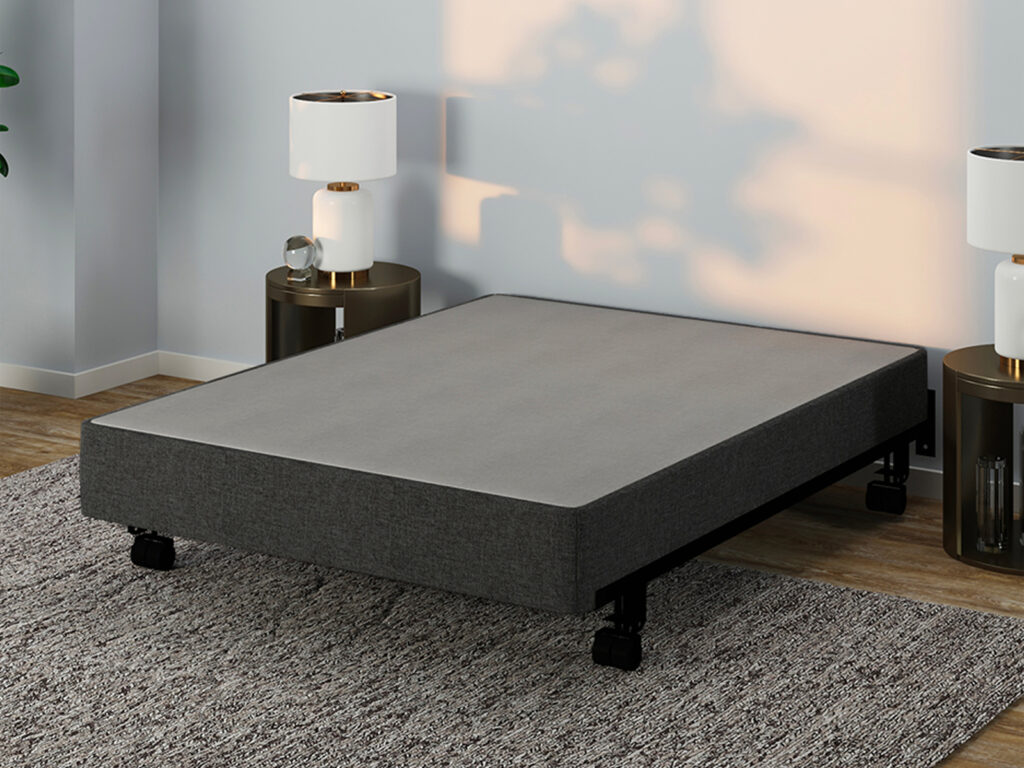
An odd-size mattress needs odd-size support too. A standard box spring foundation starts at $180, and we also make non-standard box springs from 20 to 78 inches wide and 50 to 83 inches long. For RV owners, the custom RV mattress page covers short queens, RV kings and corner cuts in detail.
Our custom-size mattresses run from 20 to 78 inches wide and 50 to 84 inches long, and every model in our main collections can be made that way except Factory Select. Custom builds take about two weeks, against about one week for a standard size. Send your measurements, and a sketch if the shape is unusual, through the custom size quote form and we’ll reply within one business day with a price and lead time.
Secondary Factors Worth Considering
Once you’ve narrowed down your mattress type and firmness, a few more factors can help you pick a winner.
Temperature Regulation
Some materials trap heat more than others. Traditional memory foam is the worst offender because its dense structure restricts airflow. If you run warm at night, look for:
- Gel-infused or copper-infused foam layers
- Open-cell foam construction
- Coil bases (hybrids and innerspring) that allow airflow underneath the comfort layers
- Natural latex, which breathes better than most foams
- Breathable cover fabrics like organic cotton or moisture-wicking blends
Motion Isolation for Couples
If your partner shifts positions or gets up during the night, motion isolation prevents those movements from reaching your side of the bed. Memory foam offers the best motion isolation. Pocketed coils (found in hybrids) come in second because each coil moves independently. Traditional innerspring, where coils are connected in a single unit, transfers the most motion.
Edge Support
Edge support matters if you sit on the edge of the bed to get dressed or if you tend to sleep near the edge. Innerspring and hybrid mattresses with reinforced perimeter coils offer the strongest edge support. All-foam mattresses tend to compress near the edges.
One factor this guide assumes is a standard bed. If the mattress is going into an RV, camper, boat or an antique frame, size stops being a choice off a chart and becomes a measurement, often with a corner cut to clear a wardrobe or a slide wall. Our guide to the best RV mattress walks through how those builds differ from a residential bed.
Common Mattress-Buying Mistakes to Avoid
Testing a mattress for five minutes in a showroom. Five minutes on your back tells you almost nothing. Lie in your actual sleeping position for at least 10 to 15 minutes. If you share the bed, bring your partner.
Choosing based on price alone. The most expensive mattress isn’t automatically the best one for you. A well-built hybrid in the mid-range can outperform a luxury mattress if it matches your sleep profile better.
Ignoring your sleeping position. Many people default to “medium-firm” because it sounds safe. But a side sleeper on a firm mattress will wake up with sore shoulders, and a stomach sleeper on a plush mattress will wake up with back pain. Your position should drive the firmness decision.
Buying without a comfort guarantee. A good mattress takes more than one night to evaluate. Look for manufacturers that offer a comfort adjustment or exchange period so you’re not stuck if the firmness isn’t right. Tampa Mattress Makers, for example, offers a 100-Night Comfort Adjustment so you can sleep on it at home and request changes if needed.
How Tampa Mattress Makers Can Help You Decide
Reading a guide is a solid start. But the fastest way to find the right mattress is to work with someone who builds them.
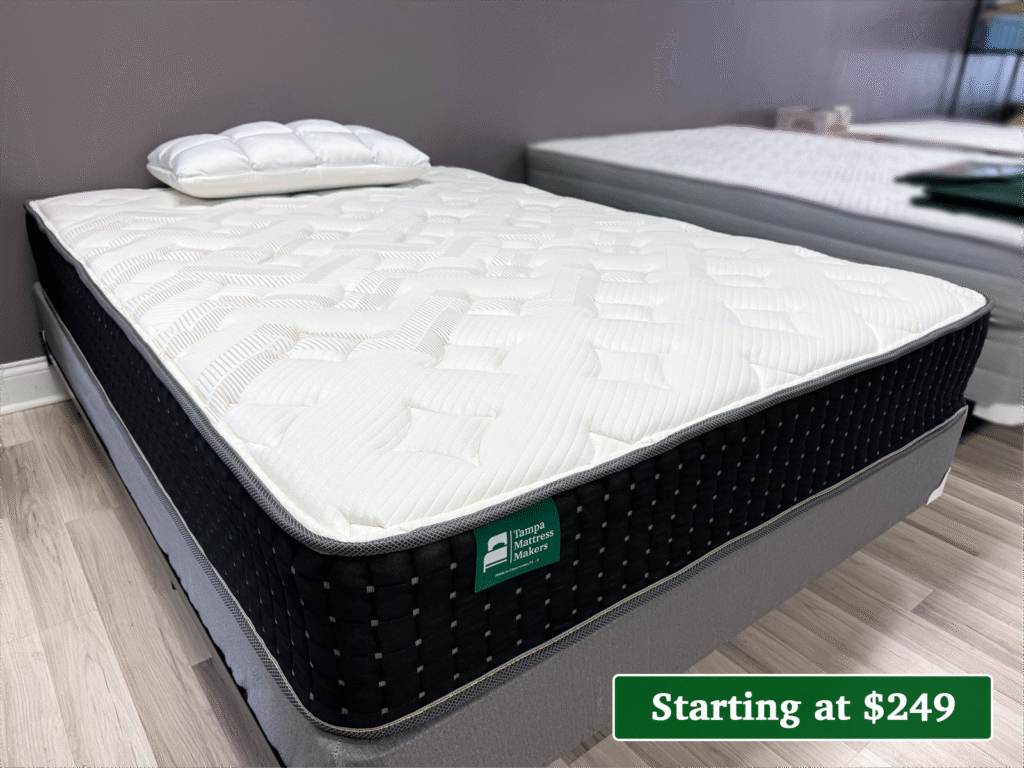
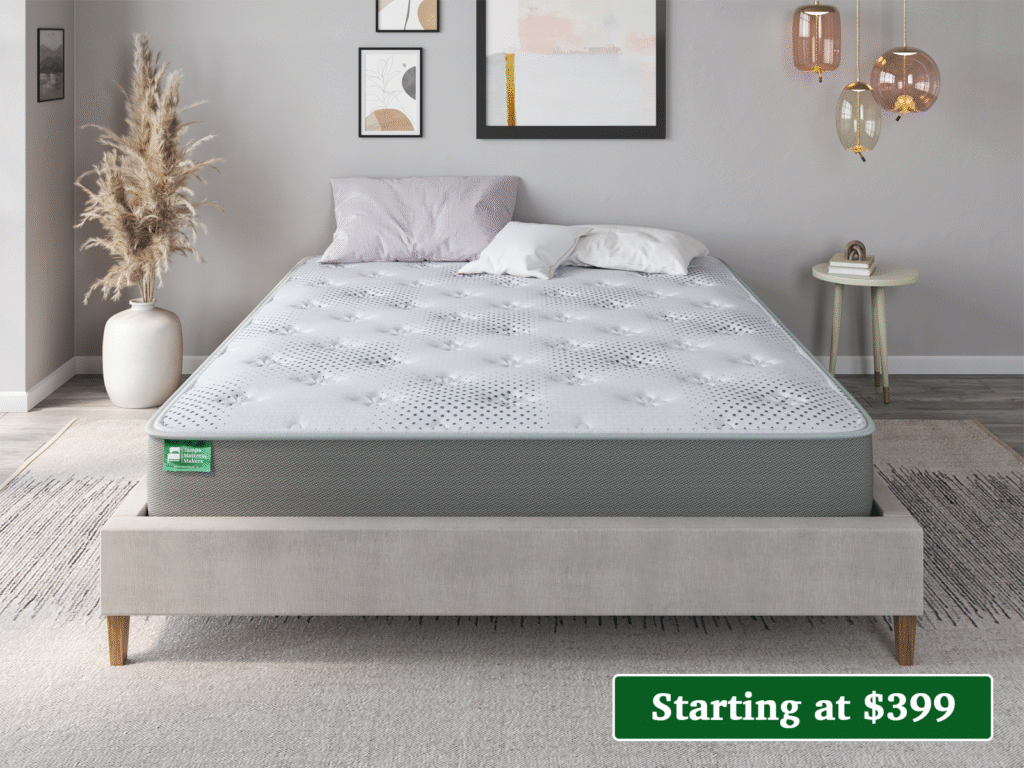
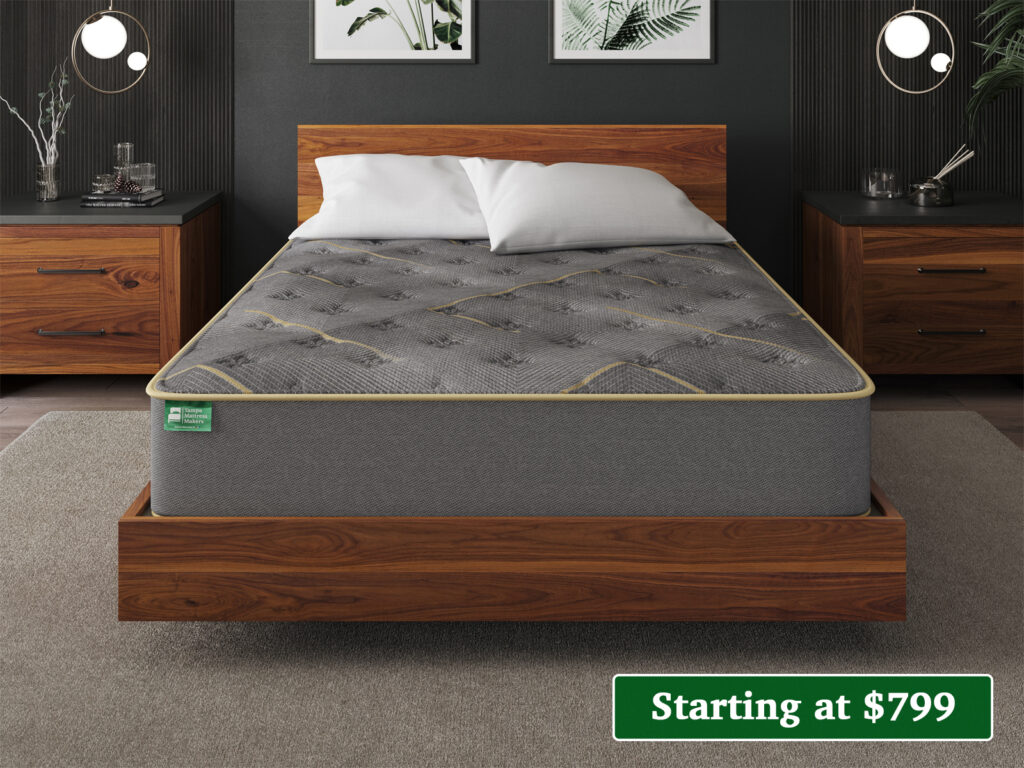
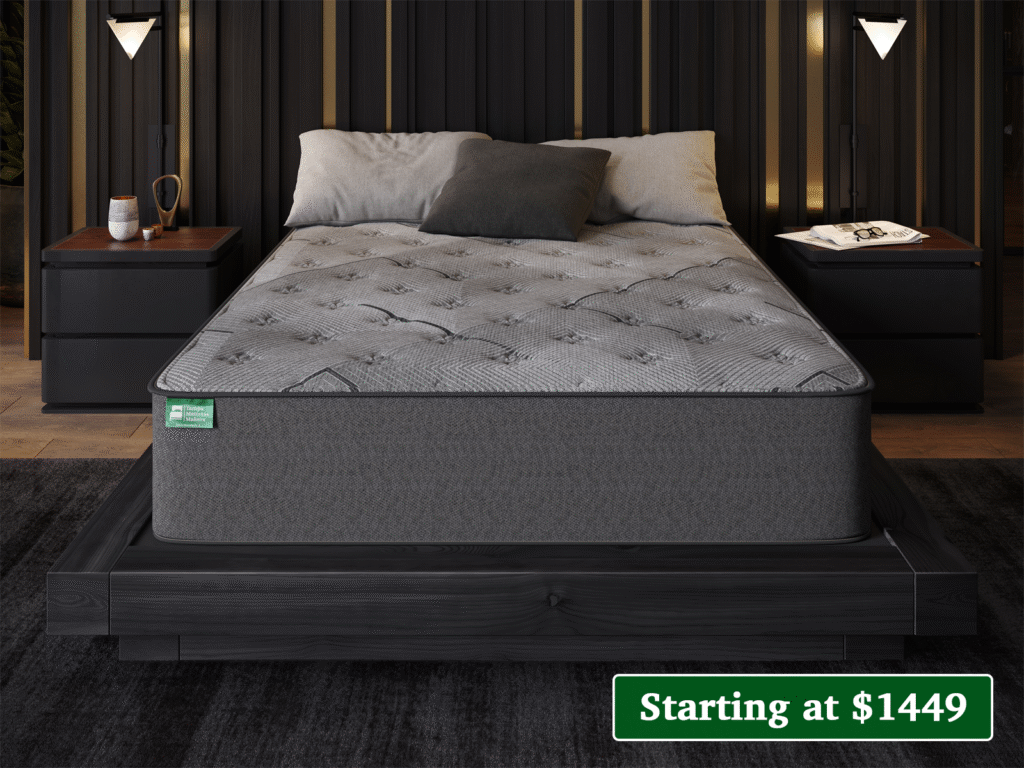
Tampa Mattress Makers handcrafts every mattress locally and offers collections for different sleeper profiles, from the Value Collection for budget-conscious buyers to the Belleair latex hybrid for hot sleepers who want natural materials. Every mattress uses CertiPUR-US certified foams, and the team at either showroom (Palm Harbor or Venice) can walk you through the decision based on your sleeping position, weight, and preferences.
If you want to go deeper on the full buying process, including sizing, delivery, and what to look for in a mattress store, check out our complete mattress buying tips guide.
Find Your Perfect Mattress
Ready to put this guide into action? Visit our Palm Harbor or Venice showroom to test mattresses in your actual sleep position. Our team will match you to the right firmness and type based on how you sleep, what you weigh, and what feels comfortable. Every mattress is handcrafted in the USA, and most of our coil models qualify for the 100-Night Comfort Adjustment Program. Browse our mattress collections online to see the full lineup.
Frequently Asked Questions
What type of mattress is best for side sleepers?
Memory foam and hybrid mattresses work best for side sleepers. Both provide enough contouring to relieve pressure at the shoulders and hips, which are the main contact points when you sleep on your side. Choose a medium to medium-soft firmness if you weigh under 230 lbs, or medium-firm if you weigh more.
What type of mattress is best for back pain?
For most people with back pain, a medium-firm mattress provides the best balance of support and comfort. Back sleepers should look for a hybrid or innerspring that keeps the spine aligned, while side sleepers with back pain should choose a slightly softer surface that cushions pressure points without letting the hips sag. If your current mattress is more than 7 to 8 years old, age-related sagging could be the cause. Here’s how to tell if it’s time to replace your mattress.
Is memory foam or innerspring better?
Neither is universally better. Memory foam excels at pressure relief and motion isolation, making it ideal for side sleepers and couples. Innerspring mattresses offer better airflow, stronger edge support, and a bouncier feel that back and stomach sleepers tend to prefer. Hybrids combine both and work well for most people.
How firm should my mattress be?
Firmness depends on your sleeping position and body weight. Side sleepers generally need medium to medium-soft. Back sleepers do best on medium-firm. Stomach sleepers need firm. If you weigh over 230 lbs, add one firmness level above these baselines because you’ll compress the mattress more. Check the firmness table earlier in this guide for specific recommendations.
How much should I spend on a mattress?
Quality mattresses range from around $800 to $3,000 for a queen. You don’t need to spend at the top of that range to get a good night’s sleep. Focus on matching the mattress to your sleep profile first, then find the best option within your budget. Locally made mattresses from manufacturers like Tampa Mattress Makers often deliver better materials and craftsmanship than mass-produced brands at comparable price points. Visit our mattress collections to compare options.
What is the best mattress for couples?
Couples should prioritize motion isolation and a compromise on firmness. A hybrid with individually pocketed coils handles both well. If you and your partner have very different preferences (one likes firm, the other likes soft), ask about split-firmness or custom options. Memory foam is another strong choice for motion isolation, though it may sleep warmer.
Can any mattress be made in a custom size?
At Tampa Mattress Makers, every model in our main collections can be built to a custom size except Factory Select models. We make rectangles from 20 to 78 inches wide and 50 to 84 inches long, plus angled, notched and radius-corner shapes. See our custom sizes page for the full range.
How do I measure my bed for a custom mattress?
Remove the old mattress and measure the platform inside the frame, width first and then length, in inches. Measure an angled corner from where the angle starts on one side to where it ends on the other, trace a rounded corner on a sheet of paper, and note the maximum thickness the bed allows.
How much does a custom-size mattress cost?
Our custom mattresses run from $249 to $2,999, depending on the size, the collection and the construction. Send your dimensions through the custom size quote form and we reply within one business day with a price and lead time.
How long does a custom-size mattress take to make?
About two weeks, compared with about one week for a standard size. Corner cuts and radius shapes take the same time, and you get a firm ship date when you place the order.