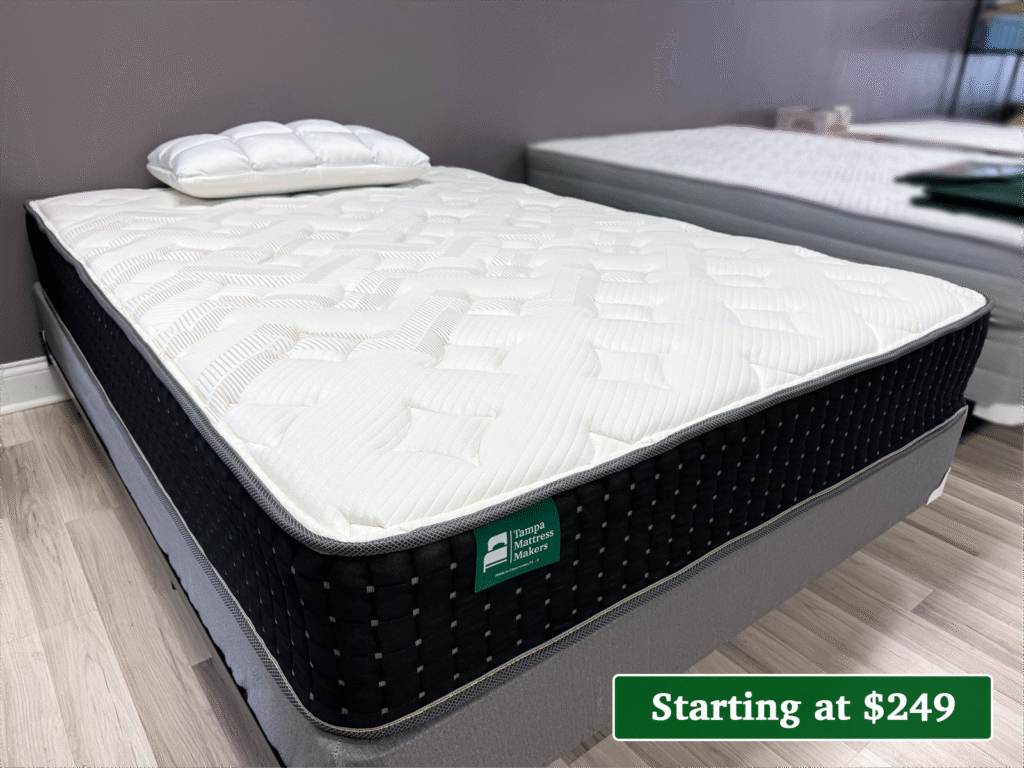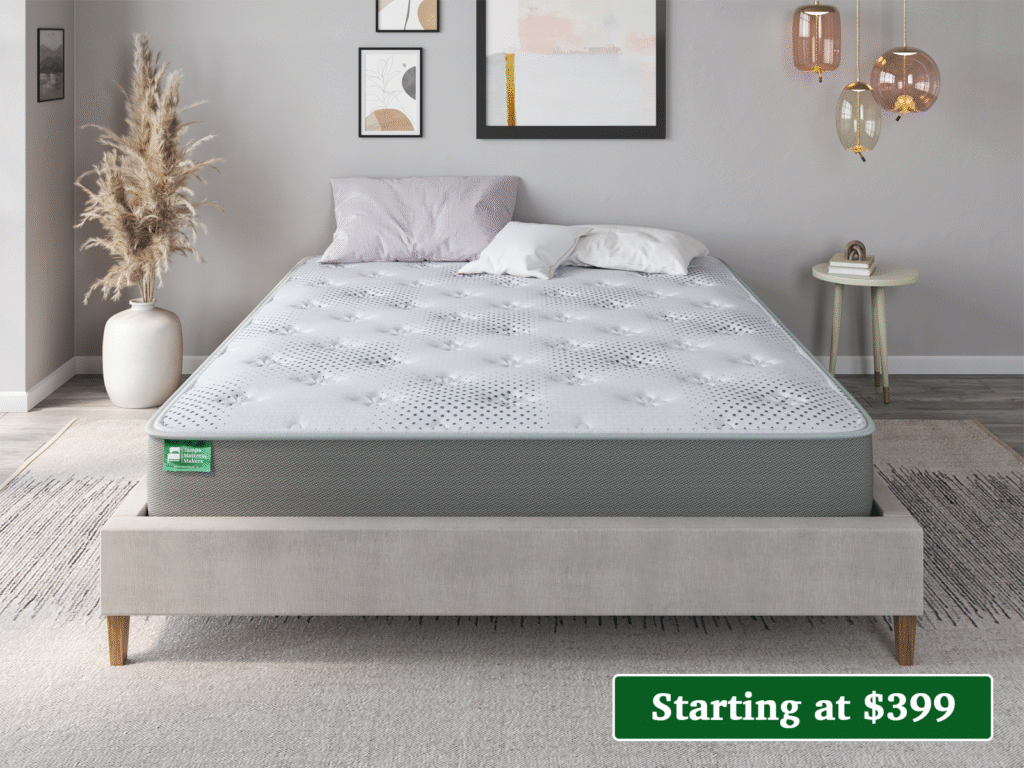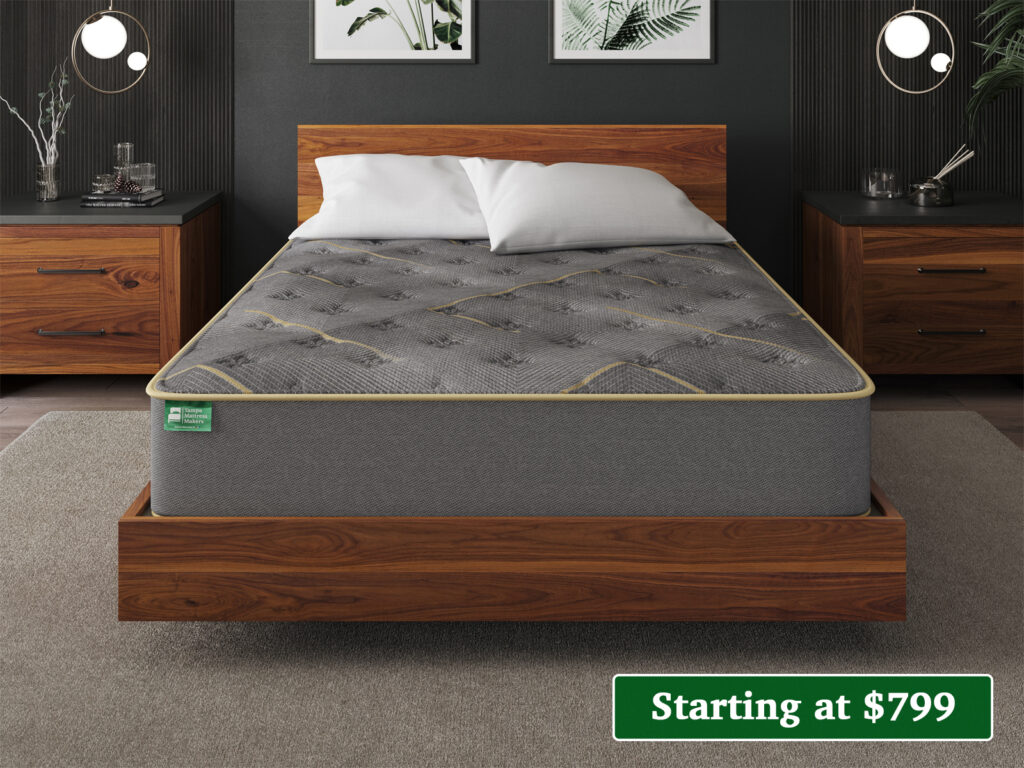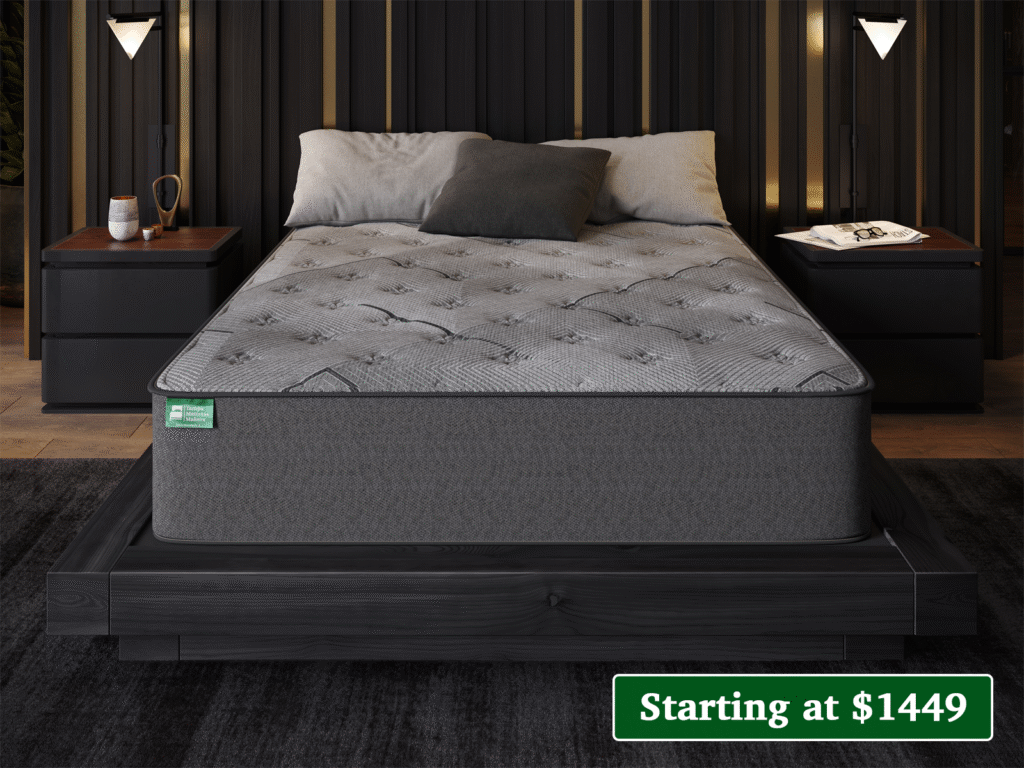

You’re about to spend somewhere between $800 and $3,000 on something you’ll use every night for the next decade (here’s how to know when it’s time to replace it). The mattress matters, obviously. But the store you buy it from determines almost everything else: whether you get honest advice or a rehearsed sales pitch, whether your warranty actually means something, and whether anyone picks up the phone if something goes wrong six months later.
Most people research mattress types for hours, then walk into whatever store is closest and hope for the best. That’s backwards. Here’s how to evaluate a mattress store before you hand over your credit card.
Why the Store Matters as Much as the Mattress
A mattress is not a TV. You can’t look up the specs, compare prices online, and know exactly what you’re getting. Comfort is subjective. Support depends on your body. And the store you choose controls three things that specs can’t tell you:
- Post-purchase support. If the mattress doesn’t feel right after two weeks, what happens? That depends entirely on the store’s trial and adjustment policies.
- Product knowledge. A good store matches you to the right mattress. A bad one steers you toward whatever has the highest margin.
- Long-term accountability. Warranties mean nothing if the store closes, changes ownership, or makes you jump through hoops to file a claim.
The mattress industry is full of markups, confusing model names, and high-pressure sales floors. The right store cuts through that. The wrong one adds to it.
8 Signs You’re Walking Into the Right Mattress Store
1. They Show You Pricing Without Games
If you have to “talk to a manager” to get a real number, leave. Trustworthy stores display their pricing clearly. There’s no manufactured urgency (“this sale ends today!”), no confusing bundles designed to obscure the actual mattress cost, and no reluctance to put a quote in writing.
Ask this: “Can I see a printed or posted price list for your mattresses?” If the answer is vague, that’s your signal.
2. The Sales Team Listens Before They Pitch
Walk in and pay attention to the first 60 seconds. Does the salesperson ask what you’re looking for, or do they immediately steer you toward a specific display? Good sales teams start with questions: What position do you sleep in? Do you have back or joint issues? What’s your current mattress, and what do you wish were different about it?
A store that trains its team to listen will also train them to recommend honestly, even if that means pointing you toward a less expensive option.
3. You Can Actually Test Mattresses for More Than 30 Seconds
A showroom should encourage you to lie on mattresses for several minutes in your natural sleep position. If the store feels rushed, cramped, or the staff hover over you while you test, that’s a problem. You need at least five to ten minutes on each mattress you’re seriously considering, and no one should be pressuring you to speed up.
This is especially true in Florida, where heat and humidity make breathability a real factor. A mattress that feels fine for 30 seconds might trap heat after a few minutes. A good showroom gives you the time to notice that.
4. They Offer a Real Trial Period, Not Just a Return Window
There’s a difference between “you can return it within 30 days for a 20% restocking fee” and a genuine comfort trial that lets you sleep on the mattress at home and make adjustments if it’s not right.
Ask specifically: “If I sleep on this for three weeks and it’s too firm, what are my options?” The answer tells you everything about how much the store stands behind what it sells. Some manufacturers, like Tampa Mattress Makers, offer programs like a 100-Night Comfort Adjustment that allow the mattress to be modified rather than simply returned. That’s a sign of confidence in the product.
5. Delivery and Setup Are Part of the Deal
A mattress in a box on your doorstep is not the same as professional in-home delivery and setup. Ask whether delivery is included, whether they’ll set up the mattress in your bedroom, and whether they’ll haul away your old one. These details matter more than most people realize, especially if you’re buying a king (see our mattress size chart) or a specialty mattress that’s heavy and awkward to maneuver.
6. The Store Has Deep Local Roots
This is where the biggest gap exists between chain stores and locally owned shops. A chain reports to a corporate office in another state. A local store answers to its neighbors.
Local mattress stores typically offer several advantages that chains can’t match:
- Customization. Local manufacturers often build or modify mattresses to order. Chains sell what’s on the truck.
- Direct accountability. If something goes wrong, you’re talking to the owner or a long-tenured employee, not a call center.
- Community investment. A local store’s reputation depends on word of mouth. They can’t afford to cut corners because their next customer probably knows their last one.
In the Tampa Bay area, this distinction is especially visible. Big-box chains rotate inventory based on national trends, but a local manufacturer can build for Florida’s climate: breathable materials, moisture-wicking fabrics, and constructions that hold up to year-round humidity.
7. Warranty Terms Are Clear and Written Down
Before you buy, ask to see the warranty document. Not a summary. Not a verbal assurance. The actual written terms. You want to know:
- How long is the coverage period?
- What’s covered and what voids the warranty?
- Who handles claims: the store, the manufacturer, or a third party?
- Do you need to use a specific foundation or bed frame to keep the warranty valid?
If the salesperson can’t produce a written warranty or stumbles through the details, that’s a store that won’t stand behind its products when it counts. A solid retailer will walk you through their warranty terms before you even ask.
8. They Ask About Your Sleep, Not Just Your Budget
The best mattress stores treat the conversation like a consultation. They want to know about your sleep habits, your physical needs, and your comfort preferences, not just how much you’re willing to spend.
When a store leads with budget, they’re optimizing for their margin. When they lead with your sleep, they’re optimizing for a fit that keeps you from returning the mattress and leaving a bad review. Both sides win, but only one approach actually helps you.
Red Flags That Should Send You to Another Store
Not every bad store is obviously bad. Some of the worst offenders have polished showrooms and friendly greeters. Watch for these patterns:
- “Today only” pricing. If every day is a sale, no day is a sale. Manufactured urgency is a tactic, not a benefit.
- Vague answers about materials. If the staff can’t tell you whether a mattress uses open-cell foam, pocketed coils, or natural latex, they’re selling a label, not a product.
- No trial period or a punitive return policy. A restocking fee over 10% is a red flag. A “no returns” policy is a dealbreaker.
- Pushy upselling. If you came in for a queen and the salesperson won’t stop talking about the king, they’re working on commission math, not your comfort.
- No physical address or local presence. Online-only stores with no showroom can offer lower prices, but you lose the ability to test before you buy and the in-person support if something goes wrong.
Local Mattress Store vs. Chain Store: What Actually Differs
The chain store pitch is simple: brand recognition, national warranties, and lots of inventory. That sounds good until you need help.
Chain employees rotate. The person who sold you the mattress may not work there in six months. Corporate warranty claims can take weeks. And the mattress you tested in the showroom may have been a floor model with different specs than what ships to your home.
Local stores operate differently. A locally owned mattress shop in Tampa, for example, often manufactures its own products or works directly with regional manufacturers. That means the store controls the supply chain from raw materials to your bedroom. If something isn’t right, adjustments happen fast because the people who sold it are the same people who built it.
This isn’t about sentimentality. It’s about structure. A local store’s business model depends on repeat customers and referrals. A chain’s business model depends on foot traffic and volume. Those two models produce very different customer experiences.
It matters more again if the bed is not a standard size. A store that builds its own mattresses can cut one to an RV platform, a boat berth or an antique frame, which no chain can do off the floor. If that is what you are shopping for, start with our guide to the best RV mattress.
Why Trying a Mattress in Person Still Matters
Online mattress companies have made buying from your couch easy. But “easy” and “right” are not the same thing.
Here’s what an in-person visit gives you that a website can’t:
- Real pressure testing. You feel how the mattress supports your shoulders, hips, and lower back in your actual sleep position. No review or spec sheet replicates that.
- Side-by-side comparison. In a showroom, you can move from a firm innerspring to a plush hybrid to a latex mattress in minutes. Online, you’re guessing based on descriptions.
- Climate-relevant feedback. If you live in Florida, heat retention matters. Lying on a mattress in a climate-controlled showroom for several minutes gives you a real sense of how the surface breathes. A “cooling gel” label on a website doesn’t mean much until you’ve felt it against your skin.
Showrooms in Palm Harbor and Venice let you test mattresses built specifically for Florida’s conditions. That’s a level of specificity no national online brand offers.
Visit Tampa Mattress Makers
We build every mattress by hand right here in Tampa Bay, and we stand behind each one with a 100-Night Comfort Adjustment Program and a clear written warranty. Stop by our showrooms in Palm Harbor or Venice to test our collections and talk with a team that knows mattresses inside and out. Or start with our guide on how to choose a mattress if you want to do some research first.
Frequently Asked Questions
What questions should I ask at a mattress store?
Start with five: What materials are in this mattress? What’s your trial or comfort adjustment policy? What does the warranty cover, and who handles claims? Is delivery and setup included? And can you recommend a mattress based on my sleep position and any pain I’m dealing with? The answers reveal whether the store is transparent and knowledgeable.
Is it better to buy a mattress from a local store or a chain?
Local stores typically offer more personalized service, direct accountability, and the ability to customize or adjust a mattress after purchase. Chains offer broader inventory and brand recognition. If long-term support and a tailored fit matter to you, local is usually the stronger choice.
How long should I test a mattress in the store?
At least ten minutes per mattress you’re seriously considering. Lie in your normal sleep position, not just on your back. A quick sit on the edge tells you nothing about how the mattress will feel at 2 a.m.
What’s the difference between a return policy and a comfort trial?
A return policy lets you send the mattress back, often with fees and conditions. A comfort trial, like a 100-night comfort adjustment program, lets you keep the mattress and have it modified (firmer, softer, different materials) until it’s right. One costs you money; the other fixes the problem.
Why are mattress prices so different between stores?
Manufacturers create store-specific model names so you can’t comparison shop. The same mattress may appear at three retailers under three different names at three different prices. This is why transparency matters: a store that explains exactly what’s inside the mattress, and prices it clearly, saves you the guesswork.
Find a Mattress Store That Puts You First
Choosing a mattress store doesn’t have to be stressful. Look for transparency, a genuine trial period, knowledgeable staff, and a business that’s rooted in your community.
Tampa Mattress Makers builds every mattress by hand in the USA and stands behind each one with a 100-night comfort adjustment program and a clear written warranty. Visit our showrooms in Palm Harbor or Venice to test our collections in person and talk with a team that’s been helping Tampa Bay sleep better for years.
If you’re still deciding what type of mattress is right for you, our guide on how to choose a mattress covers firmness, materials, and sleep positions in detail.